
Introduction
"Ryman Silence, Then a Spark": The Night Ella Langley Turned a Quiet Test Into a Breakthrough
There are venues that clap because they're supposed to.
And then there's the Ryman Auditorium—the Mother Church—where applause is never automatic and silence can feel like a verdict. The Ryman doesn't "welcome" you the way modern rooms do. It studies you. It listens like an old judge who has seen every trick, every shortcut, every shiny distraction that can hide a thin voice or a hollow story.
That's what made Ella Langley's "Country Boy's Dream Girl" moment feel so startling—not because it was loud, but because it began with something that rattles even seasoned performers:
Ryman silence.
Not boredom. Not indifference. Something sharper. The kind of quiet that says, We're not here for hype. We're here for proof.
And for older audiences—people who remember when singers had to win a room the hard way—that silence is familiar. It's the sound of listeners asking questions without speaking them: Is this real? Can she carry a song without leaning on volume? Does she belong here—or is she just passing through?
The Most Dangerous Kind of Spotlight
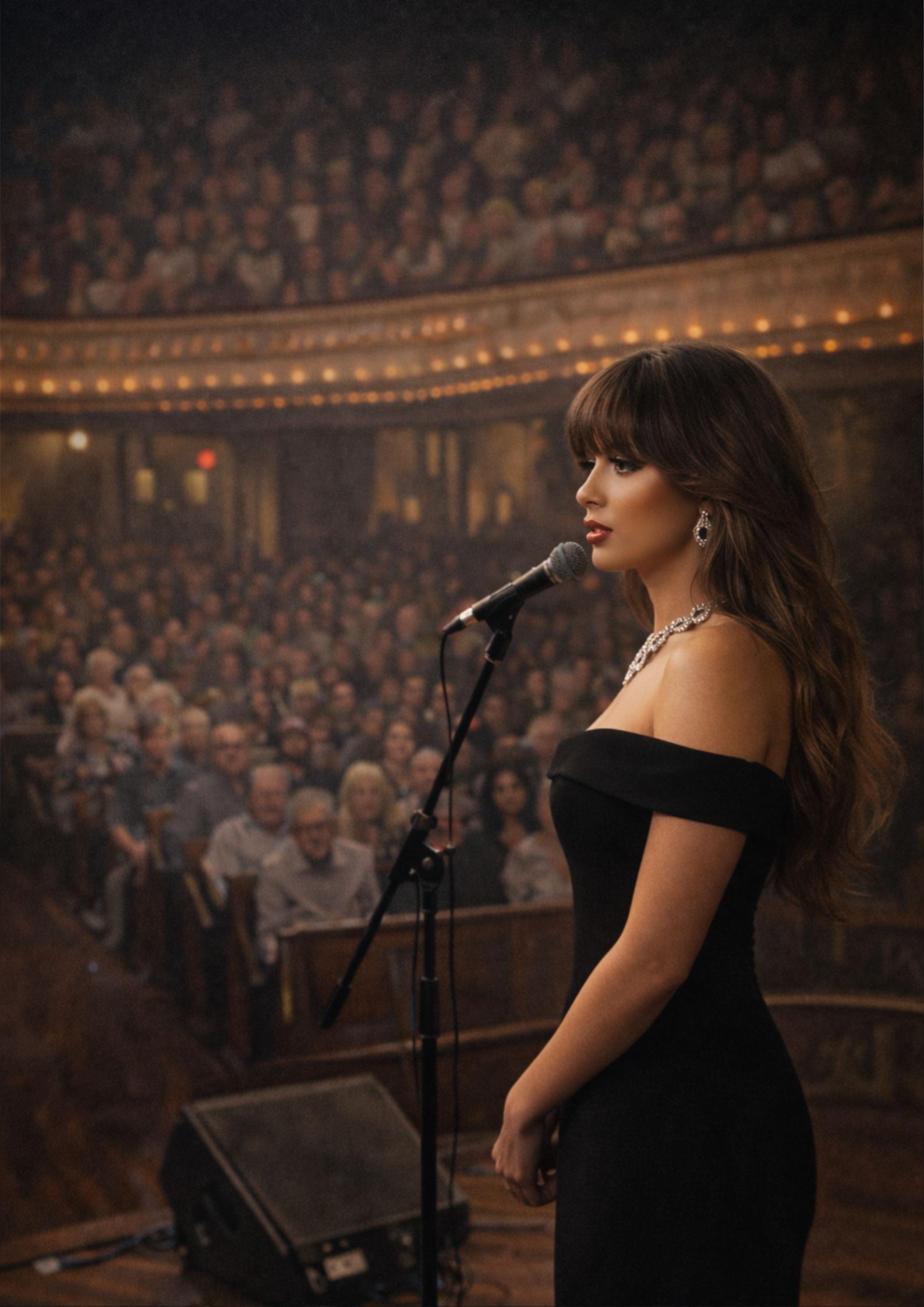
When Ella stepped onto that stage to sing "Country Boy's Dream Girl," the room didn't erupt. It didn't rush to tell her she was "amazing" before she even opened her mouth.

It waited.
That's what makes the Ryman different. The spotlight there isn't friendly—it's honest. It shows you exactly what you brought. If you came with a costume, you'll feel exposed. If you came with an attitude, you'll feel small. If you came with a story and a steady voice… you'll feel the room slowly start to trust you.
Ella didn't try to negotiate with the moment. No forced drama. No oversized gestures designed for camera clips. She didn't "sell" the silence like a marketing opportunity.
She respected it.
And then she did the one thing that turns the Ryman from a courtroom into a church:
She delivered the story straight.
No Flash—Just Truth That Lands Clean
In a music world that often confuses bigger with better, restraint can feel almost rebellious. But restraint is exactly what the Ryman rewards. It's a room built for voices that can hold a line—voices that don't need to sprint or shout to be felt.
Ella's phrasing, in this imagined scene, lands clean. The emotion stays honest. There's bite when the lyric calls for it, but it doesn't feel manufactured. It feels lived-in—like it comes from the places country music used to come from: long days, private regrets, pride you don't announce, and the kind of vulnerability you only admit in song.
That's the part that can surprise older listeners. Because credibility isn't about age—it's about weight. You can hear when a singer is borrowing emotion, and you can hear when a singer has carried something real.
For the first few lines, the room doesn't roar.
It leans in.
You can picture it: people shifting in their seats, heads tilting slightly, that unmistakable Ryman hush deepening—not because it's empty, but because it's full. Full of attention. Full of the audience quietly thinking, Alright… she's not bluffing.

The Chorus Hit Like a Match
Then the chorus arrives—and the Ryman finally lets go.
Not with a polite clap, but with something that feels like weather rolling through the room. Applause that doesn't sound rehearsed. A response that doesn't feel engineered. The kind of reaction you can't buy with promotion or manufacture with smoke and lights.
Because this wasn't loud for the sake of loud.
It got loud because it was earned.
That's the "spark" people talk about afterward. The moment a song stops being her song and becomes everyone's song. Not because it's catchy—because it's credible. Because a room full of experienced listeners just decided, all at once, that the person onstage is doing the real work.
Why This Moment Feels Bigger Than a Song
Plenty of performances go viral. Plenty of artists get pushed.
But what makes a Ryman moment linger—especially for older, thoughtful fans—is that it feels like a turning point you can measure without charts. It's the old standard, the one that mattered long before streaming numbers: Did she win the room?
On this night, Ella Langley doesn't win it with hype.
She wins it with truth.
And that's why it doesn't feel like a concert recap. It feels like a threshold—like a young artist stepping onto sacred ground and proving she can stand there without apology.
Not because the room decided to be generous.
Because she gave it no choice.
What do you think the Ryman listens for first—voice, story, or nerve? And have you ever witnessed a performance where the silence at the start told you everything?
Video